• CALENDAR
  • Course Schedule
  • Student Life
  • My Account
  • Web Mail
  • Events
  • Shop

SUBSCRIBE

logo
  • About
    • Mission & Vision
    • Accreditation
    • History
    • Partnerships
    • Board of Trustees
    • Administration & College Staff
    • Employment
    • COVID – 19
  • Academics
    • Academic Calendar
    • Academic Affairs
    • Undergraduate Programs
    • Graduate Programs
    • Arabic Language Institute
    • Course Schedule
    • Continuing Education & Professional Development Hub
    • Madrasa Pathways
    • Faculty
    • Library
    • Populi
  • Admissions
    • Admission Requirements
    • Application Procedures
    • Financing Your Education
    • Student Application
    • Non-Degree Students
  • Student Life
    • Student Services
    • Events
    • Student Affairs
    • Campus Activities
    • Housing & Parking
    • Mosque
    • Campus Safety
    • City Life
  • Hassan Institute
  • Donate
    • Campaigns
    • ACH, Stocks, & Crypto
    • Donor’s Wall
  • Apply

  • About
    • Mission & Vision
    • Accreditation
    • History
    • Partnerships
    • Board of Trustees
    • Administration & College Staff
    • Employment
    • COVID – 19
  • Academics
    • Academic Calendar
    • Academic Affairs
    • Undergraduate Programs
    • Graduate Programs
    • Arabic Language Institute
    • Course Schedule
    • Continuing Education & Professional Development Hub
    • Madrasa Pathways
    • Faculty
    • Library
    • Populi
  • Admissions
    • Admission Requirements
    • Application Procedures
    • Financing Your Education
    • Student Application
    • Non-Degree Students
  • Student Life
    • Student Services
    • Events
    • Student Affairs
    • Campus Activities
    • Housing & Parking
    • Mosque
    • Campus Safety
    • City Life
  • Hassan Institute
  • Donate
    • Campaigns
    • ACH, Stocks, & Crypto
    • Donor’s Wall
  • Apply
logo
  • About
    • Mission & Vision
    • Accreditation
    • History
    • Partnerships
    • Board of Trustees
    • Administration & College Staff
    • Employment
    • COVID – 19
  • Academics
    • Academic Calendar
    • Academic Affairs
    • Undergraduate Programs
    • Graduate Programs
    • Arabic Language Institute
    • Course Schedule
    • Continuing Education & Professional Development Hub
    • Madrasa Pathways
    • Faculty
    • Library
    • Populi
  • Admissions
    • Admission Requirements
    • Application Procedures
    • Financing Your Education
    • Student Application
    • Non-Degree Students
  • Student Life
    • Student Services
    • Events
    • Student Affairs
    • Campus Activities
    • Housing & Parking
    • Mosque
    • Campus Safety
    • City Life
  • Hassan Institute
  • Donate
    • Campaigns
    • ACH, Stocks, & Crypto
    • Donor’s Wall
  • Apply

  • About
    • Mission & Vision
    • Accreditation
    • History
    • Partnerships
    • Board of Trustees
    • Administration & College Staff
    • Employment
    • COVID – 19
  • Academics
    • Academic Calendar
    • Academic Affairs
    • Undergraduate Programs
    • Graduate Programs
    • Arabic Language Institute
    • Course Schedule
    • Continuing Education & Professional Development Hub
    • Madrasa Pathways
    • Faculty
    • Library
    • Populi
  • Admissions
    • Admission Requirements
    • Application Procedures
    • Financing Your Education
    • Student Application
    • Non-Degree Students
  • Student Life
    • Student Services
    • Events
    • Student Affairs
    • Campus Activities
    • Housing & Parking
    • Mosque
    • Campus Safety
    • City Life
  • Hassan Institute
  • Donate
    • Campaigns
    • ACH, Stocks, & Crypto
    • Donor’s Wall
  • Apply
by mesutNovember 3, 2025 Lectures, Past Lectures0 comments

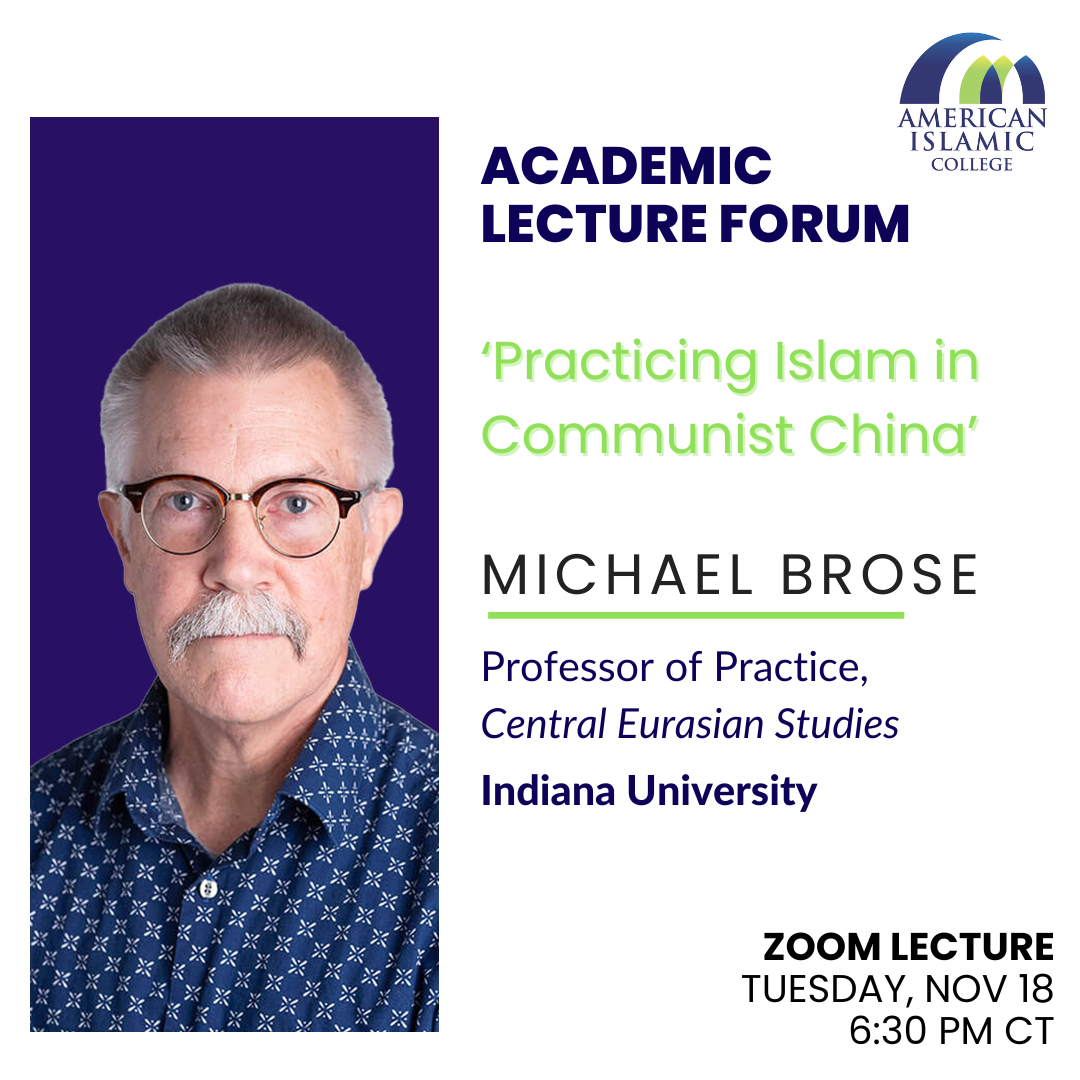
Lecture: Practicing Islam in Communist China

Date: Tuesday, November 18, 2025
Time: 6:30 PM – 7:30 PM (Chicago Time)
Venue: Online via Zoom

How do Muslims in China live, worship, and sustain their traditions under a Communist one-party state?

In this talk, Dr. Michael Brose explores how Islam has taken shape within the People’s Republic of China—a state that formally guarantees “freedom of religion” while still regarding faith as “the opiate of the people.”
Dr. Brose will introduce China’s ten officially recognized Muslim ethnic groups—including the Hui, Uyghur, Kazakh, Dongxiang, Salar, Tajik, Uzbek, Bonan, Tatar, and Kyrgyz—and discuss where they live, how they differ in culture and language, and how they practice their faith in modern China.

The lecture will also consider how China’s broader project of Sinicization—building a unified national identity centered on Han culture—shapes religious and ethnic life. Islam, with its global connections and strong communal identity, presents a unique challenge to this effort.
Two key regions illustrate these contrasting experiences:

Xinjiang: Home to the Turkic Uyghurs, whose history, language, and Islamic identity have come under intense state control and repression. (Read more)
Yunnan: A region where Chinese-speaking Hui Muslims maintain deep trade and cultural links with Southeast Asia, offering a different example of how Islam coexists with Chinese society. (Read more)
By comparing these two cases, Dr. Brose sheds light on how Islamic identity and practice have evolved under Communist rule and how Muslim communities continue to navigate faith, ethnicity, and belonging in modern China.

brose-michael

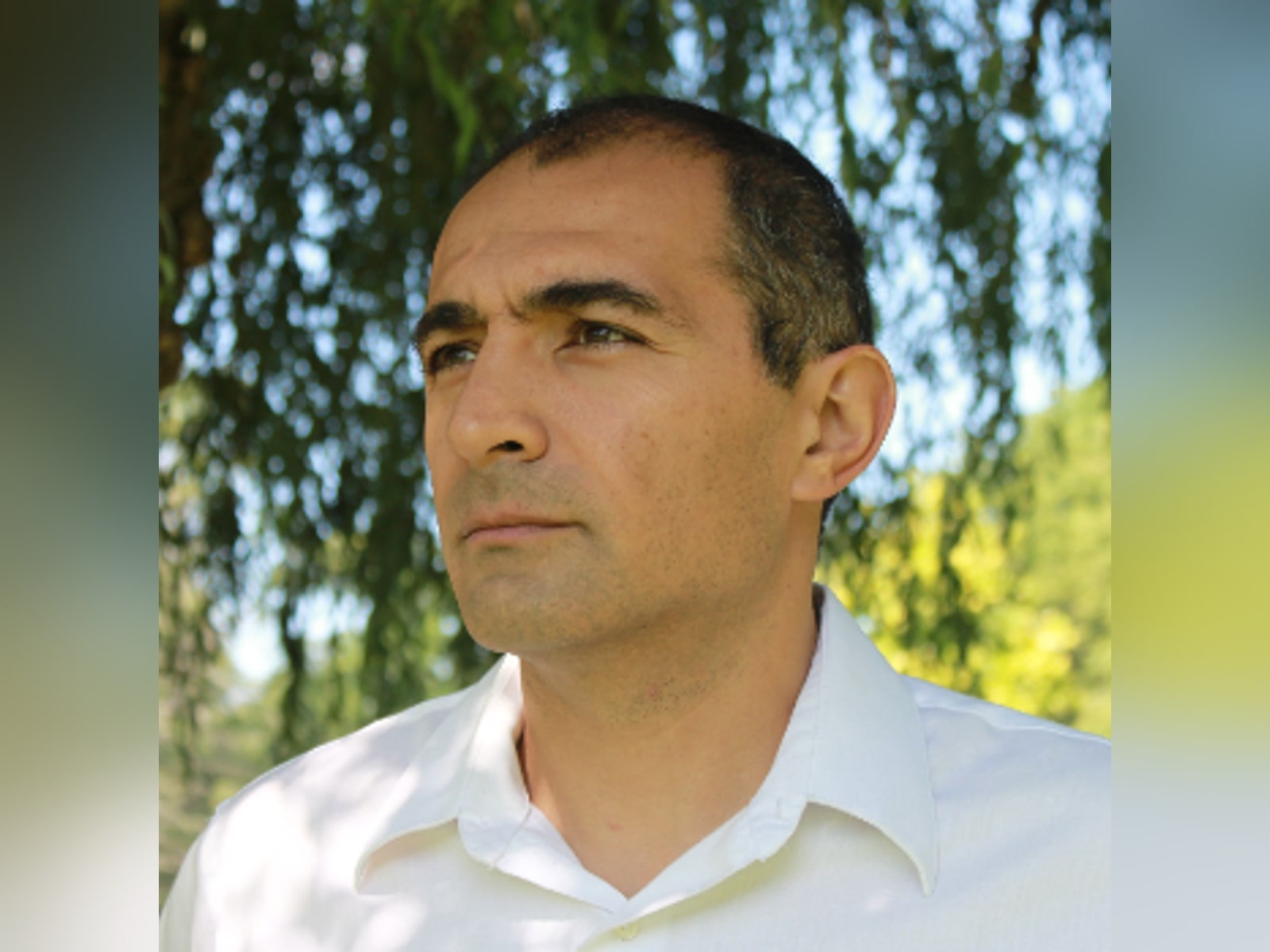
Speaker: Dr. Michael Brose

Dr. Michael Brose is a Professor of Practice in Central Eurasian Studies at Indiana University Bloomington.

His research bridges Chinese history, Central Eurasian Studies, and Islamic studies, with a focus on the Hui Muslim communities of Yunnan Province. His work examines mosque architecture, the halal food industry, and the political economy of Muslim life in contemporary China.
Dr. Brose is also active in digital history, using GIS and network analysis to study data from Chinese historical sources such as gazetteers and tomb inscriptions.

His publications include:
– “China and Transregional Halal Circuits” (Review of Religion and Chinese Society)
– “Permitted and Pure: Packaged Halal Snack Food from Southwest China” (International Journal of Food Design)
– “Globalization and the Chinese Muslim Community in Southwest China” (Asia Pacific: Perspectives)

He has also written on Mongol and Ming history and on the Uyghur elites of medieval China, combining quantitative and historical methods to study social networks across Eurasia.

View Past Events


Read More
    s
0
by mesutSeptember 22, 2025 Lectures, Past Lectures0 comments

Lecture: Palestine and the Politics of Muslim Identity

Date: Monday, September 22, 2025
Time: 6:30 PM on Zoom
Venue: Online via Zoom

Registration (Required):
Free livestream. Please register to receive link.

n_hashemi

Speaker: Nader Hashemi

Director of the Alwaleed Center for Muslim-Christian Understanding and an Associate Professor of Middle East and Islamic Politics at the Edmund A. Walsh School of Foreign Service at Georgetown University

Nader Hashemi is the Director of the Alwaleed Center for Muslim-Christian Understanding and an Associate Professor of Middle East and Islamic Politics at the Edmund A. Walsh School of Foreign Service at Georgetown University.

He obtained his doctorate from the Department of Political Science at the University of Toronto and previously was an Andrew W. Mellon Postdoctoral Fellow at Northwestern University and a Visiting Assistant Professor at the UCLA Global Institute.

Dr. Hashemi was previously the founding Director of the Center for Middle East Studies at the Josef Korbel School of International Studies at the University of Denver. While there, he was also Co-Director of the Religion and International Affairs certificate program, as well as the Political Theory Initiative.

His intellectual and research interests lie at the intersection of comparative politics and political theory, in particular debates on the global rise of authoritarianism, religion and democracy, secularism and its discontents, Middle East and Islamic politics, democratic and human rights struggles in non-Western societies and Islam-West relations.

He is the author of Islam, Secularism and Liberal Democracy: Toward a Democratic Theory for Muslim Societies (Oxford University Press, 2009) and co-editor of The People Reloaded: The Green Movement and the Struggle for Iran’s Future (Melville House, 2011), The Syria Dilemma (MIT Press, 2013), Sectarianization: Mapping the New Politics of the Middle East (Oxford University Press, 2017) and a four-volume study on Islam and Human Rights: Critical Concepts in Islamic Studies (Routledge, 2023).

He is the editor of the Oxford Handbook on Islam and Secularism (Oxford University Press, forthcoming) and his next book project focuses on explaining the global divide over Israel/Palestine.

He is frequently interviewed by PBS, NPR, CNN, CBC, Al Jazeera, Alternative Radio, Pacifica Radio and the BBC and his writings have appeared in the New York Times, Newsweek, Wall Street Journal, The Nation, Al Jazeera Online, CNN.com among other media outlets.

He is also a Non-Resident Fellow at Democracy for the Arab World Now (DAWN).

Learn more about him here.

Read More
    s
0
by mesutAugust 15, 2025 Latest News0 comments

AIC Welcomes Dr. Homayra Ziad as the New Dean of the Divinity Program and Director of the Hassan Institute for Interfaith Encounter

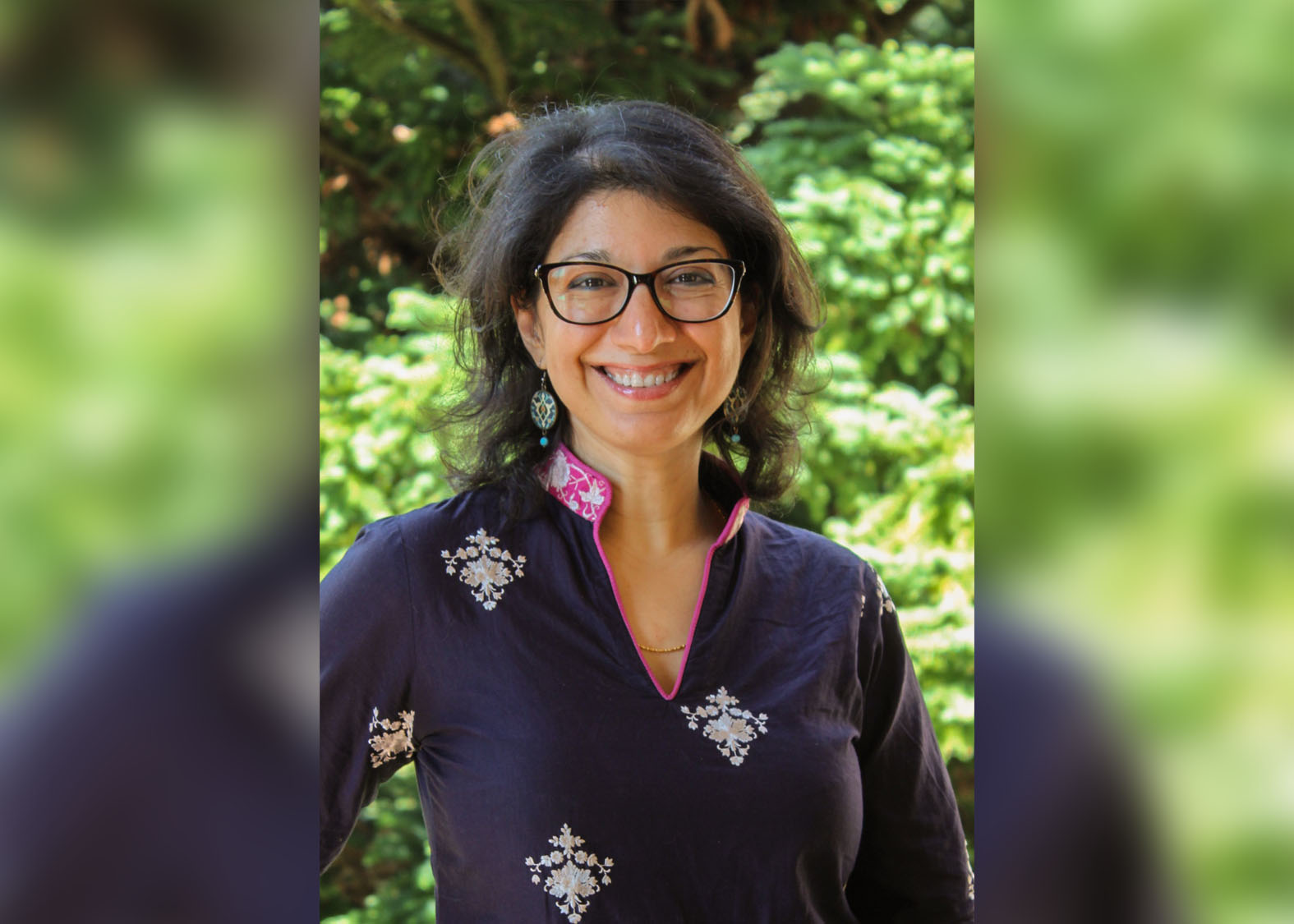
Dr. Homayra Ziad is a spiritual seeker, scholar-activist and nationally recognized interfaith practitioner, and she has served in spiritual care and leadership roles in both Muslim and interreligious settings. Earning her doctorate in Religious Studies from Yale, with a special interest in Islamic spirituality, philosophical Sufism, and Indo-Persian textual traditions, Dr. Ziad has served universities, seminaries, and faith-based nonprofits with her community-engaged teaching and scholarship grounded in equitable, compassionate relationship-building. She was Senior Lecturer and Director of the Program in Islamic Studies at Johns Hopkins University where she received the undergraduate teaching award, and was recognized for her innovative teaching and mentorship. Before this, she was Assistant Professor of Islamic Studies at Trinity College and then Scholar of Islam at the Institute for Islamic, Christian and Jewish Studies in Baltimore, where she spearheaded public engagement on Islam.

For two decades, Dr. Ziad has created educational and spiritual care programs that connect religion with the arts, public health, and mental health, and she has supported educators, activists, artists, and religious leaders in navigating pluralism and fostering networks of social change. While at Hopkins, she led a national faculty fellowship on community-engaged learning in Islamic Studies, partnered with American Muslim Health Professionals to mobilize students to address vaccine hesitancy and access in Muslim communities, and co-created Art, Religion and Cities with colleagues at Morgan State University and the Walters Art Museum. She also served on the founding teams of 99 Clay Vessels, an arts and social justice project by and for Muslim women, and Healing Khayal, a music and healing residency for young artists in Pakistan. Dr. Ziad was on the Board of the ACLU of Maryland and served for two years as Board President.

Dr. Ziad was founding co-chair of the American Academy of Religion’s (AAR) Interreligious and Interfaith Studies Group. She writes for academic and popular venues, consults on programs for film and media, and is co-editor of Words to Live By: Sacred Sources for Interreligious Engagement (Orbis Press, 2018). Most recently, she served as Director of Campus Partnerships at Interfaith America. 

“We are so thrilled to have Dr. Homayra lead our Divinity Program and take our Hassan Institute to new levels of transformative engagement and impact. Her wisdom and pastoral spirit will bring so much guidance and support to our M.Div. students, and her rich interfaith experience and international network will elevate and expand the work of the Hassan Institute, in sha’ Allah. Welcome Dr. Homayra!”

Dr. Timothy J Gianotti, President

Read More
    s
0
by mesutJuly 26, 2025 Latest News0 comments

An Interview with Aytug Izat on the Early Years of the American Islamic College

Date: July 26, 2025

Participants:

  • Aytug Izat
  • Prof. Dr. Alparslan Acikgenc
  • Interviewer: Prof. Dr. Ibrahim Ozdemir

Introduction and General Atmosphere

On the evening of July 26, 2025, I conducted a Zoom interview with Mr. Aytug Izat to preserve key memories and historical reflections on the early years of the American Islamic College (AIC). We were joined by Prof. Dr. Alparslan Acikgenc, a longtime friend of Mr. Izat from their time in Chicago and a former student of the late Fazlur Rahman at the University of Chicago.

At Mr. Izat’s request, the interview was conducted in Turkish. The discussion ranged widely, beginning with his arrival in the U.S. and continuing through his involvement in establishing AIC. The following is a chronological summary of the topics discussed.

Arriving in America: First Impressions

Aytug Izat:
When we arrived in the United States, we came with a vision shaped by old advertisements and idealistic portrayals. We believed America to be the center of democracy, human rights, and respect for free will. In many ways, this was true—but it was also a chaotic and contradictory society, full of contradictions between its ideals and realities.

I traveled via Moscow and spent three days there with Alparslan Bey—you may recall. Before entering the U.S., we were thoroughly searched at the Moscow airport, and even my tourist souvenirs and photos were confiscated.

I spent my first night in New York, and it quickly became clear how dangerous the streets were and how unsafe ordinary people felt. I later learned—much to my shock—that in 1974, the city had approximately 60,000 police officers but an estimated 66,000 gang members.

We also faced the harsh reality of discrimination. Among the most unwanted groups in American society at the time were Turks and African Americans. Ironically, my research later revealed that Turkish Americans had a higher-than-average education and income level. In neighborhoods with large Turkish and Muslim populations, crime rates were remarkably low, and social problems like alcohol, drugs, gambling, and prostitution were nearly nonexistent. Despite this, dominant groups often sought to belittle Muslims and Turks—a contradiction that had a profound impact on me.

In response, I felt a strong calling to help raise awareness among Turkish and Muslim communities in America. In 1977, I co-founded the Muslim Lobby with Rahman Khan from Afghanistan. I even participated in the Republican Party Convention where Ronald Reagan was nominated, representing Muslim communities. This opened doors to communication with many political figures and Muslim leaders, including African American Muslims, the late Malcolm X, Muhammad Ali, and many others.

Chicago State University and Dr. Mohammad Abdul Waheed Fakhri

While working at Chicago State University, I met Dr. Mohammad Abdul Waheed Fakhri, a distinguished Pakistani educator and a profoundly committed intellectual. I was leading a federally funded project evaluating university academic programs at the time, and we quickly became close colleagues.

Dr. Fakhri introduced me to several Islamic organizations, beginning with ISNA (Islamic Society of North America). During a visit, I was unexpectedly elected president of the Muslim Educators’ Association, a sub-organization under ISNA.

Prof. Ozdemir:
You served as president?

Aytug Izat:
Not of ISNA itself, but of the Muslim Educators’ Association. It was a surprising election. Dr. Fakhri said, “There are divisions among the groups here. We have a Turkish brother among us, and Turks are known for being organized and disciplined. Let’s elect him as president.” And so, they did.

However, it wasn’t an easy task. Despite setting clear rules and drafting bylaws, implementation was poor. The organizational disarray bothered me deeply, and I eventually stepped down. Looking back, I see how much both ISNA and AIC have changed since those days.

Chicago Elections and Harold Washington

In 1983, I was teaching a Social Sciences and Research course at Chicago State University. That year’s local elections presented a unique opportunity for fieldwork. My students and I conducted surveys and analyzed voting trends.

The university’s vice president, Dr. Williams, was a close friend of Harold Washington, a Black Democratic mayoral candidate. He asked if we had any analysis on the race. I told him we did. We knew the Italian-American mafia had significant influence over Chicago politics, and although Washington had strong grassroots support, many doubted he could win.

I said, “There are 250,000 Muslim voters in Chicago who typically don’t participate. It could shift the outcome if Harold Washington can establish a direct connection with the Muslim community.”

We included Muslim voters in the campaign strategy and submitted sealed predictions. The final results nearly matched our forecast—Washington won with a margin of only 0.3%. Muslim support proved decisive.

Mr. H Wasington, Ahmed Sakr, Aytug Izat (sitting), E. Donmez.

Following this success, I was asked to establish and lead the Commission on International Relations in Chicago, a position I gladly accepted.

The Founding of American Islamic College

Initial efforts to establish the American Islamic College (AIC) had begun during this period. A building was to be purchased, and Dr. Mohammad Abdul Waheed Fakhri had been offered the position of Dean and Professor, which he accepted. He invited me to visit AIC with him. During that visit, they said, “Why don’t you join us too?” And I agreed.

I had some friends over for breakfast on the Sunday before our visit. The television was on, and suddenly Ismail al-Faruqi appeared on the screen, speaking on Islamic topics. His face radiated light, and his words were powerful.

We were captivated. My guests were equally mesmerized.

I remember thinking, “There are still such noble people in the world…”

A few days later, Dr. Fakhri and I attended an event where I met Ismail al-Faruqi in person. I had admired him from afar and meeting him in person left an even deeper impression.

He said, “In sha Allah, you will come here.”
I replied, “We’re already planning to.”
Only later did I find out it was actually al-Faruqi who had arranged for me to be invited.

Prof. Ozdemir: So, it was al-Faruqi who invited you to AIC?

Aytug Izat: Yes, absolutely. If I had met him in my youth, we might have clashed. In earlier years, he was quite doctrinaire—strongly Pan-Arabist and Pan-Islamist. But over time, his views evolved. He began advocating for interfaith dialogue, conveying Islam’s universal message with greater inclusivity.

What was most compelling about him was his presence. That one televised appearance sparked admiration for Islam across viewers—but sadly, he was never invited to speak on air again. And tragically, he and his wife were later murdered in their home.

Thus began my journey with AIC.

Soon after, we returned to Chicago, and with the Islamic Development Bank’s support, the AIC property was purchased.

The AIC Campus and the Founding Phase

Aytug Izat: Ibrahim Bey, had you seen the AIC buildings before?

Prof. Ozdemir: Yes, I visited in 1997 for a conference and had the opportunity to tour the campus.

Aytug Izat: The buildings were magnificent and had formerly been used as a Catholic convent school. They were acquired for $3.5 million under the condition to be used for educational purposes. Today, I believe the property would be valued at $15–20 million.

We removed Christian symbols—crosses and decorative plasterwork—with a Lebanese friend from the upper floors. During this process, we faced threats. Dead animals were thrown onto our cars, and we received intimidating letters.

It was not an easy time.

I rented an apartment on the 17th floor of a building across from the college. During this time, I met Dr. Ahmad Sakr, who served as AIC’s Secretary-General. He was a charismatic and persuasive leader. When I joined the faculty, I was given the roles of Registrar and Admissions Officer and became responsible for student financial aid.

But our work wasn’t confined to the office. We would travel by car to various universities and cities to promote AIC.

The early years were spent mainly on the road.

We hadn’t even begun admitting students when Harold Washington and Muhammad Ali visited AIC. We didn’t yet have functioning meeting halls or classrooms.

Muhammad Ali visit. Aytug Izat, far right.

At that time, attracting students was a major challenge. We decided to offer free courses to all applicants.

Alhamdulillah, this approach brought in genuinely talented and committed students.

Internal Sincerity, External Criticism

We faced many curious incidents. Internally, we had decided to take turns leading Friday and daily prayers. One day, it was my turn. As I stepped forward, someone from the back objected: “You shouldn’t lead; you don’t have a beard!”

Someone else stepped forward and led the prayer instead. In that moment, I thought: Faith resides in the heart, yet some people judge solely based on outward appearance. They condemn without understanding.

There were also some somewhat naive attitudes at times.

The call to prayer was usually made by administrators or faculty members, based on the prayer times for the Chicago longitude. When new students heard the adhan during class, they would leave immediately and head to prayer without even asking the professor for permission.

Getting them to understand that disrupting a class was inappropriate and that the prayer could still be performed within its designated time window was quite a challenge.

In addition, some students considered eating at a desk “against the Sunnah” and insisted that meals should be eaten on the floor. We had to deal with those issues as well.

Over time, things became more balanced. However, before I left, I began to suspect that some students or staff had outside affiliations. It felt like they had been placed at AIC with a particular agenda.

That marked a serious turning point.

Meeting T. B. Irving: Scholar of Language and the Quran

One of the most influential people I met in those years was Professor T. B. Irving. Originally from Canada, he converted to Islam at age 19. He spoke more than 15 languages fluently and was a brilliant intellect.

While traveling in Latin America—perhaps Mexico—he once heard an epic poem, and by the time he returned, he had transformed it into verse and submitted it to a publisher.

He was meticulous about English and Arabic.

He had reviewed nearly 45 English translations of the Quran and criticized their use of Christian terms that distorted the Quranic message. His translation used accessible American English and was preceded by a detailed introduction explaining his method.

His analysis of the word “submission” still resonates with me. In Christianity, it often implies passive surrender, whereas in Islam, it signifies a conscious, voluntary orientation of the heart. He taught us the profound significance of linguistic nuance.

Institutional Challenges

Some colleagues tried to impose their cultural habits as if they were Islamic traditions. I would push back: “That’s your culture, not Islam.”

We had to focus on substance, not form.

Converts like T. B. Irving often grasped the essence of Islam better than those born into the faith.

Support from Mayor Harold Washington

One vital but often forgotten figure in AIC’s early success was Harold Washington, the first African-American mayor of Chicago. He supported AIC in accreditation and official procedures. Sadly, that relationship later deteriorated, perhaps due to mutual misunderstandings. Nevertheless, his support was critical.

History should remember that had Harold Washington not sought Muslim support, he likely would not have won the election.

Al-Faruqi’s Vision for AIC

Prof. Ozdemir: What was al-Faruqi’s vision for AIC?

Aytug Izat: It was crystal clear. He wanted an institution that could intellectually represent Islam—not just in theology, but also in the social sciences and the arts. He envisioned a Muslim university that could sit at the academic table alongside leading Western institutions—a bridge between the Muslim world and America, grounded in scholarship and ethics.

Lost Archives and Photographs

AIC once had many historic photographs—Harold Washington, Elijah Muhammad’s son Warith Deen Mohammed, Muhammad Ali, Dr. Ahmad Sakr, and I all in one frame. That photo was enlarged and displayed, but one day it vanished, as did many documents, archives, and memories.

Prime Minister Turgut Ozal’s Visit to AIC (1986)

In 1986, Turkish Prime Minister Turgut Ozal visited AIC during an official trip to the U.S. I joined the last-minute delegation upon Hasan Celal Guzel’s invitation. AIC was not initially on the itinerary. I briefed Ozal on the plane, and the visit was added.

Though brief—only 30 minutes—Ozal was impressed. He said, “Let’s support this institution,” and instructed his staff accordingly. Sadly, most photos taken that day were later lost—at least those in my possession.

Al-Faruqi’s Silent Vision and Lost Manuscript

Al-Faruqi was not a man of many words. Our conversations were usually brief, over breakfast or lunch. He believed interfaith dialogue was an ontological necessity.

“Each religion ascends the same mountain from a different side,” he would say.

Tragically, the manuscript in which he expressed these views vanished after his assassination—perhaps intentionally taken by his killer.

The Mission of Education: Cultivating Virtuous Individuals

Islam calls us to read, record, live ethically, share beauty, and be grateful.

It urges a harmony of knowledge, wisdom, and virtue—not mere form, but moral substance. Education and governance aim to cultivate ethical individuals and leaders who recognize that even animals and plants are part of our moral community.

Dr. Fakhri: The Quiet Founder

Dr. Abdul Waheed Fakhri was a perfectionist, dignified, and preferred to stay behind the scenes. In truth, he was the principal founder of AIC, both academically and administratively. He was responsible for at least 90% of the academic infrastructure.

Patient, visionary, and an exceptional communicator.

Remembering as a Responsibility

Many in today’s AIC leadership may not know this history. But remembering is not only a duty to the past—it is a legacy for the future.

May God bless all who contributed.
May He grant peace and wisdom to those still among us.

Final Note:

This interview offers a vital window into the early years of AIC, highlighting the sacrifices, testimonies, and contributions of Aytug Izat within a larger historical context. At its heart stands the visionary leadership of Ismail al-Faruqi, the dedication of Dr. Fakhri, and the rising consciousness of the American Muslim community amid political and cultural challenges.

I extend my heartfelt thanks to Mr. Aytug Izat and Prof. Dr. Alparslan Acikgenc for this invaluable conversation. As I begin a new chapter in my life and leadership at AIC, their wisdom and support are deeply needed and appreciated.

Let us always remember and honor those who laid the foundation of this noble institution in the spirit of the timeless wisdom of our beloved Prophet ﷺ, who said:

إِنَّ الدَّالَّ عَلَى الْخَيْرِ كَفَاعِلِه ‏

“Whoever leads to good, he is like the one who does it.” (at-Tirmidhi 2670)

About Aytug Izat

Mr. Aytug Izat was born in 1943 in Elazig, Turkiye, and grew up in the village of Yurtbasi. From an early age, Aytug Bey was inspired by one guiding principle: to help others truly, one must first gain deep knowledge and then pass it on. This conviction led him to pursue a life devoted to education.

He earned his bachelor’s degree in special education and educational psychology from Ankara University and a Master’s in Curriculum Development and Evaluation from Hacettepe University.

In 1974, he traveled to the United States to pursue doctoral studies in Comparative Education at the University of Chicago. During this time, he also served as a research assistant and taught courses at the University of Chicago and Chicago State University. He was the Registrar and Admissions Officer of AIC.

Upon returning to Turkiye in 1984, he worked at the State Planning Organization under the Prime Ministry, serving within the Education Group. He later joined Hacettepe University as Assistant to the Director, contributing to academic administration and program development.

From 1985 to 1991, Mr. Izat served as Deputy Undersecretary at the Ministry of Culture, where he played a key role in shaping national cultural and educational policies.

Since retiring, he has made his home in Izmir, continuing to share his knowledge and experiences through writing, mentorship, and community engagement.

Read More
    s
0
by mesutJuly 22, 2025 Latest News0 comments

More Good News from AIC!

American Islamic College has achieved membership with NC-SARA, State Authorization Reciprocity Agreement, which authorizes AIC to provide quality distance learning to students across the United States, Alhumdulillah!

To students living outside Illinois (across the USA and across the globe): This is your opportunity to access a faith-rooted, academically rigorous education in Islamic studies—right from your home state. We warmly encourage you to apply and become part of our growing, diverse online learning community.

Read More
    s
0
by mesutJuly 15, 2025 Latest News0 comments

Get to Know Dr. Ibrahim Ozdemir

Meet New AIC Vice President for Academic Affairs, Dr. Ibrahim Özdemir

 A former university president and internationally respected environmental philosopher, VPAA Özdemir shares how he will be a part of President Timothy’s team and how his leadership ethos shapes his engagement with students, faculty, and the broader AIC community.

Leading with an Open Heart and Mind

Four Ways AIC’s New Academic Leader Embodies Authenticity, Dialogue, and Shared Growth

Dr. Ibrahim Özdemir is the newly appointed Vice President for Academic Affairs of AIC. Known internationally for his scholarship in environmental ethics and interfaith dialogue, Özdemir brings with him not only a distinguished academic career but a deep commitment to inclusive, curiosity-driven, and student-centered education.

Having started in his new role on August 1st, Dr. Özdemir is already gaining recognition across the AIC community for his warm, approachable presence and intellectually open spirit.

As a former university president and advisor to global sustainability initiatives, he brings a collaborative, service-oriented mindset to academic leadership. “We are not just preparing students for jobs—we’re preparing them to be compassionate and critically engaged global citizens,” Özdemir says.

Here are four ways Dr. Özdemir is helping shape a renewed academic culture at AIC—one rooted in shared inquiry, deep listening, and ethical leadership.

  1. Lead as a Co-Learner and Collaborator

“In every setting—from meetings to talking with students—I don’t come with all the answers,” Dr. Özdemir says. “I come to learn as much as I come to lead.”

He invites colleagues and students to co-create solutions when discussing curriculum development or student research projects. “Great teams grow through mutual respect and the joy of discovery,” he adds. His academic philosophy is grounded in shura—the Islamic principle of collective consultation—and reflects his experience fostering inclusive dialogue across faiths and disciplines.

“As educators and leaders, we must embody the ethical integrity and open-mindedness we wish to inspire in our graduates. Let us remember that our beloved Prophet ﷺ was described as a ‘living Qur’an’—bringing the Qur’anic wisdom and values to life through his actions, character, and example.” — VPAA Özdemir.

  1. Embrace and Admit Uncertainty

Dr. Özdemir quickly acknowledges when he doesn’t have an immediate answer. But rather than see that as a limitation, he views it as an invitation to engage.

“As a philosopher, I hold that authenticity carries greater weight than authority. When I don’t know something, I acknowledge it openly, inviting others to explore the answer with me.” — VPAA Özdemir.

This attitude creates space for shared problem-solving and allows AIC’s academic leadership to be transparent, reflective, and responsive. He frequently redirected questions to the faculty senate or student governance bodies, reinforcing their agency and voice in institutional decisions.

  1. Ask Open-Ended, Meaningful Questions

Whether speaking with faculty over coffee or engaging students after Jumu’ah, Dr. Özdemir is known for his thoughtful questions:

  • What inspires your work right now?
  • What barriers to learning should we be addressing together?
  • What makes you feel seen and heard at AIC?

He believes that good leadership begins by allowing others’ stories to emerge.

“We listen not just to respond, but to understand what kind of community we’re building together.”     — VPAA Özdemir.

  1. Be an Active Listener, Always

For Dr. Özdemir, the most powerful ideas are rarely born in boardrooms—they emerge in genuine conversation. A self-described student of Socrates, he applies the Socratic method across his academic and professional life, guided by the conviction that “dialogue is a form of mutual care.”

His leadership style is grounded in attentiveness—keeping his ear to the ground, learning as much from hallway exchanges as formal meetings. Whether advising students on their capstone projects or mentoring faculty toward publication, he meets people where they are. “We are shaping something greater than ourselves,” he often reminds his colleagues, “and that requires attention to both vision and voice.”

Drawing on his experience with UNESCO’s environmental ethics initiative, Dr. Özdemir extends this principle beyond the campus. He urges institutions to recognize that fundamental transformation begins when academic goals align with moral responsibility—to the Earth, society, and future generations.

Looking Ahead: AIC’s Promise for Transformative Education

As American Islamic College expands its academic programs, strengthens interfaith engagement, and prepares students for leadership in a complex world, Dr. Ibrahim Özdemir remains focused on one guiding mission: cultivating a culture of learning grounded in integrity, openness, and hope—values envisioned by the late Ismail R. al-Faruqi as the enduring spirit of AIC.

“Our role is to teach facts and help students cultivate wisdom, humility, and courage. That’s what an Islamic liberal arts education is truly about.” — VPAA Özdemir

Read More
    s
0
by mesutJuly 10, 2025 Latest News0 comments

AIC Welcomes Dr. Ibrahim Ozdemir: Vice President of Academic Affairs

We are delighted to introduce Dr. İbrahim Özdemir as AIC’s new Interim VP for Academic Affairs and welcome him to the talented, diverse, and growing AIC team. Dr. Ibrahim is a professor of environmental philosophy, and his works span the fields of environmental philosophy and ethics, ecology and religion, practical ethics, philosophical counseling, critical thinking, and Islamic philosophy. More specifically, his work explores the ethical responsibilities of individuals, communities, and governments towards the environment and advocates for a more sustainable and ecologically conscious approach to human activities.

Dr. Ibrahim has held teaching and senior administrative positions at universities in Turkiye, the US, and Finland since 1992. These include Harvard university, Hartford International University (formerly Hartford Seminary), Uskudar University, Abo Akademi University, and University of Turku – Finland. A widely respected Muslim environmentalist and lecturer, he is a life member of the World of Philosophy and the Turkish Association of Philosophy. In addition to his own scholarly books, articles, and presentations, he has served as a member of the drafting team for the Islamic Declaration for Global Climate Change (2015) and Environment, Religion and Culture in the Context of the 2030 Agenda for Sustainable Development (2016), which was published by UNEP. Presently, he is a core member of the draft team preparing the “al-Mizan: A Covenant for the Earth” document, which will be presented to UN.

He was noted in the book, Contemporary Thought in the Muslim World: Trends, Themes, and Issues by Carool Kersten (Routledge Press, 2019), as “the most prominent Islamic environmentalist in Turkey for many years”.

Welcome, Dr. Ibrahim!

Read More
    s
0
by mesutJune 1, 2025 Events, Hassan Institute, Past Events0 comments

Exploring the Stories of India with Audrey Truschke

Exploring the Stories of India with Audrey Truschke

Date: Sunday, June 1, 2025
Time: 5:00 PM – 8:00 PM CT

Doors open at 5:00 PM with a light reception.

Roosevelt University Schaumburg Campus – Zurich Alumni Hall
1400 Roosevelt Blvd
Schaumburg, IL 60173

There will be an opportunity to purchase the book and have it signed at the end of the event.
Advanced registration is required for this free but ticketed event.

Join us for an exciting book launch celebrating India by Audrey Truschke, a magisterial history spanning five millennia of the Indian subcontinent—from the Indus Valley Civilization to the complexities of the twenty-first century. This richly textured narrative explores the region’s political, social, religious, and cultural evolution, spotlighting its astonishing diversity and the voices of women, religious minorities, and marginalized groups. The evening will feature a wide-ranging, historically informed theological conversation on contemporary Hindu-Muslim relations, with Truschke joined by two leading scholars, delving into how India’s contested past continues to shape its present and future.

Registration Open

SPEAKERS

Audrey Truschke is Professor of South Asian History at Rutgers University in Newark, New Jersey. Trained in Sanskrit and Persian, her research focuses on the cultural, imperial, and intellectual history of medieval and early modern India as well as the politics of history in modern times. She is the author of three books: Culture of Encounters: Sanskrit at the Mughal Court (Columbia University Press, 2016), Aurangzeb: The Life and Legacy of India’s Most Controversial King (Stanford University Press, 2017), and The Language of History: Sanskrit Narratives of Indo-Muslim Rule (Columbia University Press, 2021). Her most recent book, India: 5,000 Years of History on the Subcontinent, will be published by Princeton University Press in June 2025.

Anantanand Rambachan is Professor Emeritus of Religion at Saint Olaf College, Minnesota, USA (1985-2021). He was also Forum Humanum Visiting Professor at the Academy for the Study of World Religions at the University of Hamburg in Germany (2013-2017). His books include Accomplishing the Accomplished: The Vedas as a Source of Valid Knowledge in Ṡaṅkara; The Limits of Scripture: Vivekananda’s Reinterpretation of the Authority of the Vedas, The Advaita Worldview: God, World and Humanity, A Hindu Theology of Liberation: Not-Two is Not-One; Essays in Hindu Theology and Pathways to Hindu-Christian Dialogue. Prof. Rambachan has been involved in interreligious relations and dialogue for over 40 years, as a Hindu contributor and analyst. He is a Co-President of Religions for Peace.

R. David Coolidge is Research Faculty at Bayan Islamic Graduate School. He was previously the Associate University Chaplain for the Muslim Community at Brown University, the Muslim Advisor at Dartmouth College, and Adjunct Assistant Professor of Public Service at New York University. He received a PhD from the Graduate Theological Union in 2023, and an MA in Religion from Princeton University in 2008. He has served on the boards of various American Muslim nonprofit organizations, including Zaytuna College, Taleef Collective, and Al-Kisa Foundation. As a preacher, he has given hundreds of sermons/talks and led prayers in dozens of Sunnī and Shīʿī masjids around the country. R. David Coolidge has produced numerous academic publications, as well as books and articles of relevance to the wider American Muslim community.

MODERATOR

Mahan Mirza is the visiting Vice President for Academic Affairs at American Islamic College for the 2024 – 2025 year. He is also the Executive Director of the Ansari Institute for Global Engagement with Religion at the University of Notre Dame and a teaching Professor of Islam & Science in the Keough School of Global Affairs. Mirza holds a BS in Mechanical Engineering from University of Texas Austin, MA from Hartford Seminary in Islamic Studies and Christian-Muslim Relations, and PhD in Religious Studies from Yale University. Dr. Mirza has edited two special issues of The Muslim World and served as assistant editor of the Princeton Encyclopaedia of Islamic Political Thought.

WELCOME

Timothy J. Gianotti is the President of American Islamic College and a scholar of classical Islamic theology, philosophy, and spirituality with strong interests in Islamic Psychology, Moral Theology, Ethics, Political Thought, comparative religion and spirituality, and interfaith relations; more specifically, he is a scholar of Abu Hamid al-Ghazali (d.1111), one of the most important religious thinkers of the classical period. Dr. Gianotti is also recognized as a Muslim theologian, pastoral leader, and committed interfaith advocate with extensive experience promoting interfaith engagement around the globe. Dr.Gianotti is the author of Al-Ghazali’s Unspeakable Doctrine of the Soul (Leiden: E.J. Brill, 2001) and In the Light of a Blessed Tree: Illuminations of Islamic Belief, Practice, and History (Eugene, OR: Wipf & Stock Publishers, 2011).

Hosts:

American Islamic College
Ansari Institute for Global Engagement with Religion at University of Notre Dame
Roosevelt University

Sponsors:

American Islamic College
Ansari Institute for Global Engagement with Religion at University of Notre Dame
Roosevelt University
Indian American Muslim Council
Liu Institute for Asia and Asian Studies
Hindus for Human Rights
South Asian American Coalition to Renew Democracy
The Sikh Coalition.

Download Flyer:

Exploring the Stories of India Flyer

Read More
    s
0
by mesutMay 9, 2025 Events, Past Events0 comments

2025 Commencement Ceremony

Date: Friday, May 9, 2025
Time: 2:30 PM CT
Where: Library, Main Bldg, American Islamic College

With hearts full of gratitude, joy, and pride in our graduates, we celebrated a powerful milestone at American Islamic College on May 9, 2025. This was our first graduation ceremony since the onset of the pandemic. As we celebrate the commitment and academic achievement of the graduates, we renew our dedication to the pursuit of knowledge for the love of God and the service of humanity.

A heartfelt thank you to Dr. Teepu Siddique, our esteemed honorary doctorate recipient, for his lifelong contributions to science and his love for the broader sphere of learning, and we thank our esteemed keynote speaker, Alia J. Bilal, for her inspiring words and unwavering commitment to community and justice.

Congratulations to our graduates! May your journeys ahead be filled with purpose, impact, and Divine blessing.

Honorary Doctorate Recipient: Dr. Teepu Siddique

Pakistani American neurologist best known for his discoveries concerning the genetic and molecular abnormalities underlying the neurodegenerative disorder amyotrophic lateral sclerosis (ALS). Dr. Siddique’s distinction extends beyond the laboratory. He is a true “man of letters,” an intellectual whose passion for knowledge encompasses vast landscapes of human thought.

This honorary degree acknowledges not only his long and impactful career as a scientist but also his lifelong embrace of learning in its widest sense, embodying the very essence of a liberal arts education that AIC champions. Dr. Siddique stands as an inspiring figure, demonstrating the harmonious coexistence of rigorous scientific inquiry and a deep appreciation for the humanities, a confluence that enriches both the individual and the world.

Commencement Speaker: Alia J. Bilal

Alia J. Bilal serves as Chief Executive Director at the Inner-City Muslim Action Network (IMAN), a nonprofit community organization based in Chicago that fosters health, wellness, and healing in the inner-city by organizing for social change, cultivating the arts, and operating a holistic health center. Alia co-leads and oversees the administration, strategic development, communications, and program implementation of the organization.

In her 15 years at IMAN, Alia has helped the organization grow from a small nonprofit with an operational budget under $1 million to an organization with over 100 full-time staff members, a federally qualified health center, multiple campuses in Chicago and Atlanta, and an operational budget of over $20 million.

View Full Album
Read More
    s
0
by mesutMay 8, 2025 Lectures, Past Events, Past Lectures0 comments

Mecca in Morocco: Articulations of Muslim Pilgrimage in Moroccan Everyday Life

 Mecca in Morocco: Articulations of Muslim Pilgrimage in Moroccan Everyday Life

Date: Thursday, May 8, 2025
Time: 6:30 PM Light Reception | 7:00 PM Talk
Library, American Islamic College

Moderator: Dr. Omer Awass

Omer Awass is an associate professor of Arabic and Islamic Studies at the American Islamic College in Chicago, IL. His current research interests center on religion, modernity, and globalization. He has been carrying out field research on contemporary fatwas across the Muslim world to assess how they are negotiating their postcolonial realities. His book Fatwa and the Making and Renewal of Islamic Law is published by Cambridge University Press (2023). Read More >

Speaker: Dr. Kholoud Al-Ajarma

Kholoud al-Ajarma is Alwaleed Lecturer in the Globalised Muslim World and Deputy Director of the Alwaleed Centre, University of Edinburgh.

Kholoud holds a Ph.D. in Anthropology and Comparative Study of Religion from the University of Groningen (Netherlands). Her PhD thesis focused on the socio-cultural embeddedness of Muslim pilgrimage (Hajj) in Moroccan everyday life. During her Ph.D. studies, she worked as a lecturer at the University of Groningen and delivered several courses including ‘Anthropology of Muslim Societies’, ‘Islam: History, Sources, and Practices’, and ‘Minorities in Contemporary Europe’. Her current research focuses on water resource management and contemporary environmental concerns in the Muslim World.

Kholoud received her MA in Peace Studies and Conflict Resolution from Coventry University (UK) and her Mphil in Anthropology and Development from the University of Bergen (Norway). In addition to her academic experience in anthropology and religion, Kholoud has worked in the fields of refugee studies, gender, youth development, migration, human rights, and environmental justice in several countries of the Mediterranean region including Palestine, Jordan, Egypt, and Morocco. She was a Chevening visiting fellow at Oxford Centre for Islamic Studies (OCIS) and peace fellow of the MENA cohort fellowship programme of the United Nations Allience of Civilizations (UNAOC).

Kholoud is also an award-winning photographer and film-maker who has extensive experience developing and leading programs and projects among refugee communities, including innovative platforms for human rights research and media production among young refugee youth. Full bio.

Register Now
Read More
    s
0
  • 1
  • 2

Facebook
Twitter
YouTube
Instagram

Subscribe to our Newsletter

American Islamic College

Location:
640 W Irving Park Rd,
Chicago, IL 60613
Office Hours:
9:00am – 5:00pm
Telephone:
773.281.4700
Email:
info@aicusa.edu
Complaints:
IBHE


Academics

  • Academic Calendar
  • Academic Affairs
  • Undergraduate Programs
  • Graduate Programs
  • Arabic Language Institute
  • Course Schedule
  • Continuing Education & Professional Development Hub
  • Madrasa Pathways
  • Faculty
  • Library
  • Information Sessions

Admissions

  • Admission Requirements
  • Application Procedures
  • Financing Your Education
  • Non-Degree Students
  • Information Sessions
  • Visit a Class

Student Life

  • Student Life
  • Events
  • Housing & Parking
  • Mosque
  • Campus Safety
  • City Life

© 2024 American Islamic College | All Rights Reserved | Privacy Policy