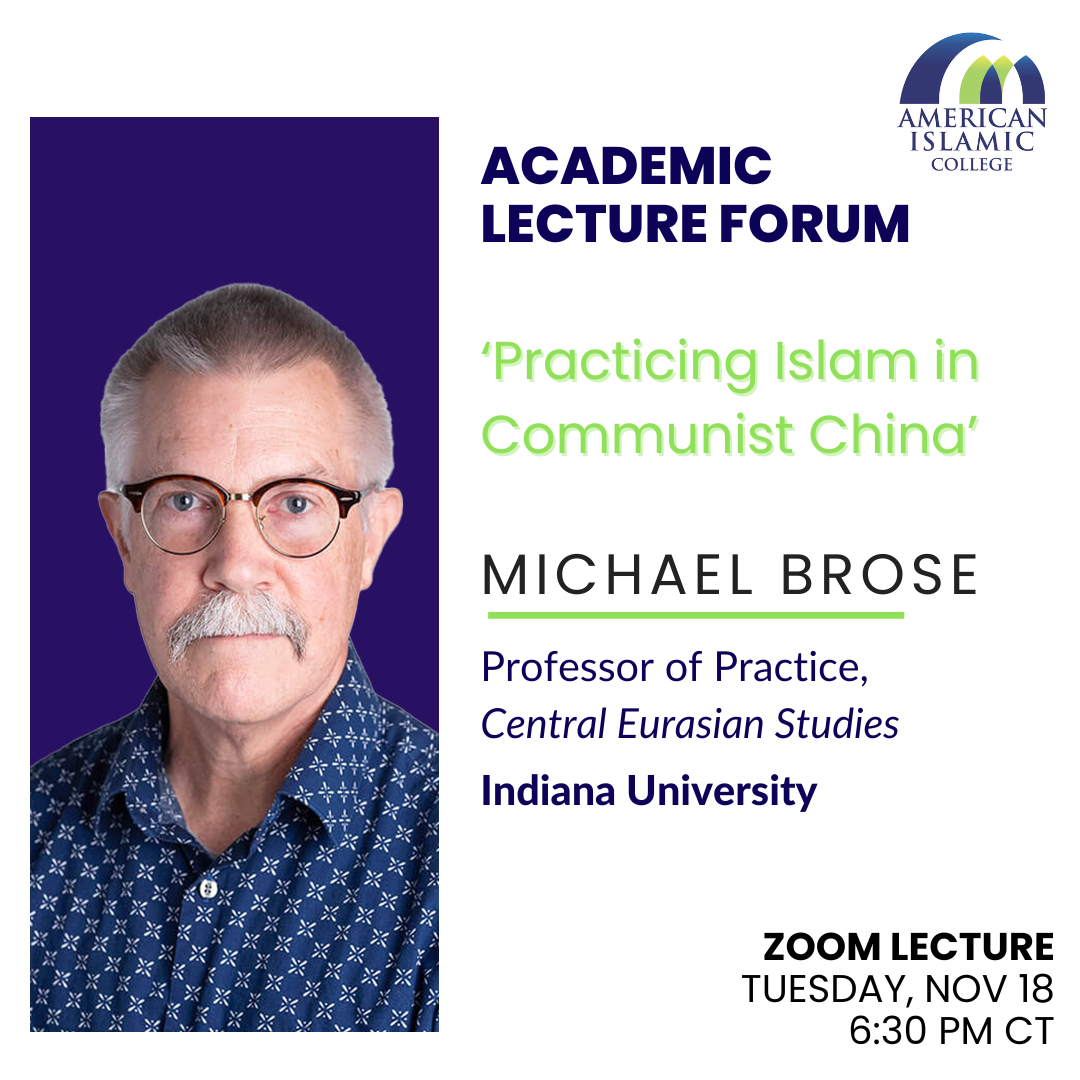
Date: Tuesday, November 18, 2025
Time: 6:30 PM – 7:30 PM (Chicago Time)
Venue: Online via Zoom
How do Muslims in China live, worship, and sustain their traditions under a Communist one-party state?
In this talk, Dr. Michael Brose explores how Islam has taken shape within the People’s Republic of China—a state that formally guarantees “freedom of religion” while still regarding faith as “the opiate of the people.”
Dr. Brose will introduce China’s ten officially recognized Muslim ethnic groups—including the Hui, Uyghur, Kazakh, Dongxiang, Salar, Tajik, Uzbek, Bonan, Tatar, and Kyrgyz—and discuss where they live, how they differ in culture and language, and how they practice their faith in modern China.
The lecture will also consider how China’s broader project of Sinicization—building a unified national identity centered on Han culture—shapes religious and ethnic life. Islam, with its global connections and strong communal identity, presents a unique challenge to this effort.
Two key regions illustrate these contrasting experiences:
Xinjiang: Home to the Turkic Uyghurs, whose history, language, and Islamic identity have come under intense state control and repression. (Read more)
Yunnan: A region where Chinese-speaking Hui Muslims maintain deep trade and cultural links with Southeast Asia, offering a different example of how Islam coexists with Chinese society. (Read more)
By comparing these two cases, Dr. Brose sheds light on how Islamic identity and practice have evolved under Communist rule and how Muslim communities continue to navigate faith, ethnicity, and belonging in modern China.

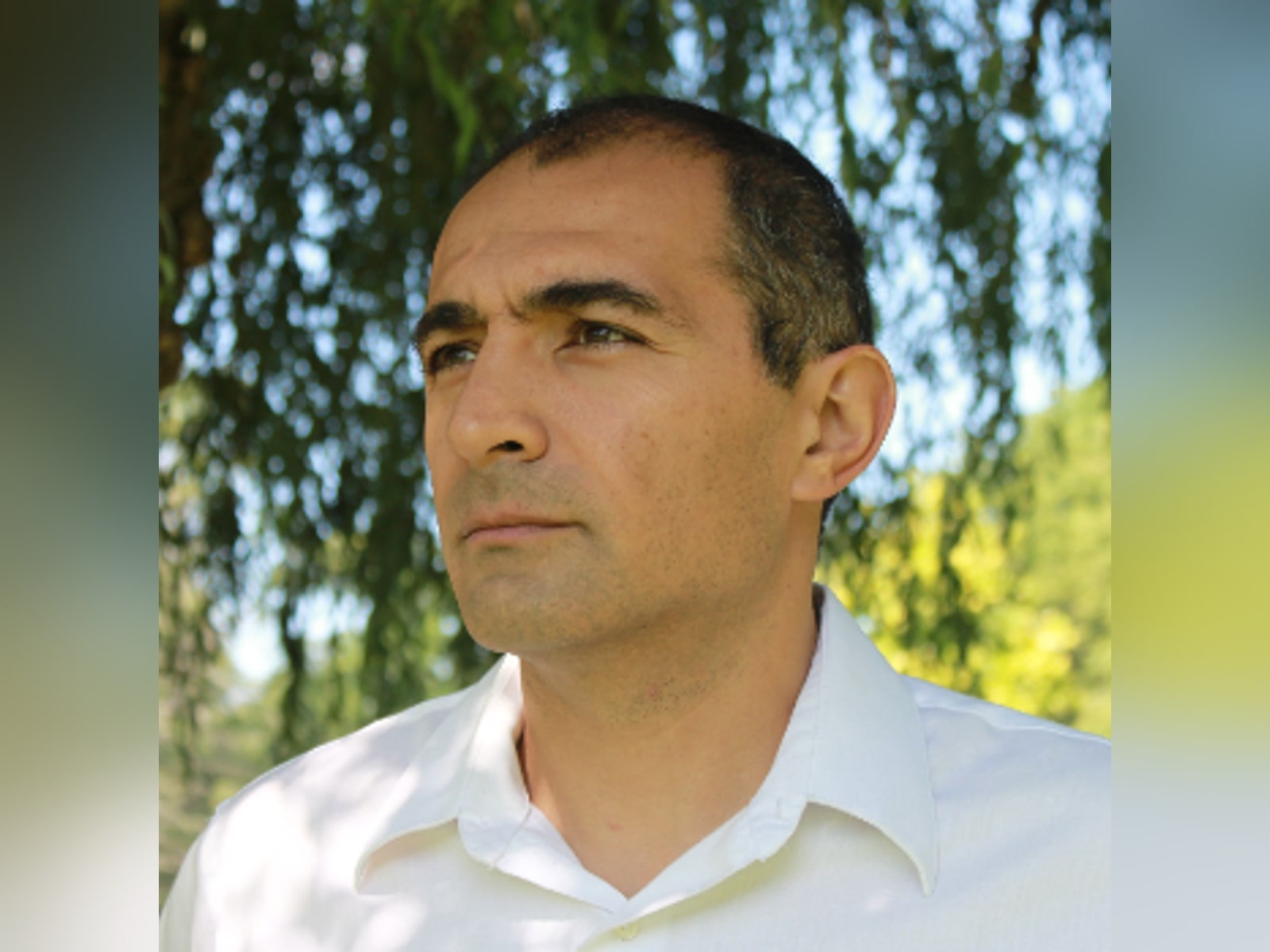



Omer Awass is an associate professor of Arabic and Islamic Studies at the American Islamic College in Chicago, IL. His current research interests center on religion, modernity, and globalization. He has been carrying out field research on contemporary fatwas across the Muslim world to assess how they are negotiating their postcolonial realities. His book Fatwa and the Making and Renewal of Islamic Law is published by Cambridge University Press (2023).
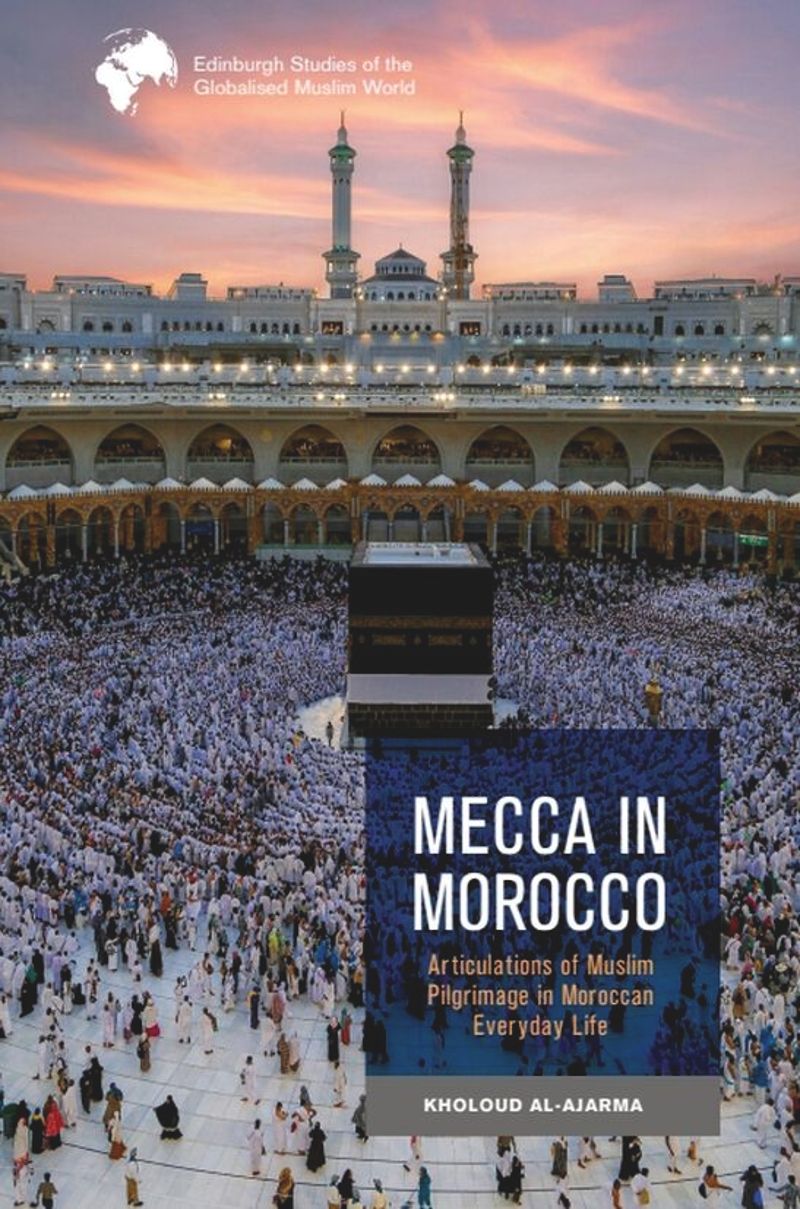
Kholoud al-Ajarma is Alwaleed Lecturer in the Globalised Muslim World and Deputy Director of the Alwaleed Centre, University of Edinburgh.


Our society is increasingly composed of multiple subcultures—ethnic, religious and political. How do these subcultural communities reproduce themselves across generations? Why are some more successful at this than others? Professor Abdelhadi’s current book project answers these questions using the case of second-generation immigrant Muslim Americans. I trace individuals’ relationships with Muslim communities across the life course, showing the ways in which attachment is gendered at individual, household and institutional levels.
Shabana Mir is Associate Professor of Anthropology and Director of Undergraduate Studies. She teaches Islamic Studies, Gender Studies, Research Methods, Anthropology, Social Sciences, and Muslim American and Muslim World Literature. She is the author of the award-winning book Muslim American Women on Campus: Undergraduate Social Life and Identity, published by the University of North Carolina Press (2014). The book has received the Outstanding Book Award from the National Association for Ethnic Studies and the Critics’ Choice Award from the American Educational Studies Association (2014). Shabana taught at Millikin University, University of Southern California online, Oklahoma State University, Indiana University, Eastern Illinois University, and the International Islamic University (Islamabad). She received the Outstanding Dissertation Award for her doctoral dissertation from the American Anthropological Association’s Council on Anthropology and Education (2006). She conducted ethnographic fieldwork in the Washington, DC area, as Visiting Researcher at the Center for Muslim-Christian Understanding, Georgetown University. She also has an M.A. in English Literature from Punjab University, Pakistan and an M.Phil. in Education from Cambridge University (U.K.). Dr. Mir has lived, studied, and taught in the United States, the United Kingdom, and Pakistan. She has worked as a curriculum designer, residence hall director, retreat leader, faculty development expert, and research consultant in a variety of settings. Shabana has written academic chapters, journal articles, children’s literature, a blog, and, of course, her book. She is an international public speaker on gender, religion, education, and politics. She speaks English, Urdu and Punjabi, and some Arabic and Farsi.
Ibrahim N. Abusharif, PhD, is an associate professor in residence in the Journalism and Strategic Communication Program. His fields of research include narrative journalism, religious studies, and the decolonization of storytelling. Specifically, his academic interests include the study of the intersections of religion and media, particularly digital media disruptions and their effects on contemporary religious authority. He also researches the origins, promulgation, and effects of key journalistic framing terminologies used in prominent Western news sources in their coverage and reportage of the Middle East and Muslim minorities in the West.
Rebekah Coffman is a historian, preservationist, and curator currently serving as curator of religion and community history at the Chicago History Museum where she leads the Chicago Sacred initiative. Her interdisciplinary work is at the intersection of religious identity and the built environment and explores themes of tangible and intangible heritages in material and visual culture through place-based, community-centered approaches.
Talaat Pasha is the director of the Arabic Language Institute at the American Islamic College in Chicago. He holds a Ph.D. in Linguistics from University of Utah. He is an education consultant of curriculum and instruction. Dr. Pasha is also a certified coach and trainer in Personality Types, in Mental Fitness (PQ), in Adventures in Wisdom (to coach kids and teens) and an instructor of Mental Health First Aid (MHFA). He is the founder of PASHA ACADAMY Consulting and Training, to offer life and executive coaching services and facilitate workshops for personal and professional growth.